Marc Jarrett

Saturday, 23 March 2024
The Great Discovery!
Money talks, in every language: If you are a course creator, you'll want to know about this: is a new monetized e-learning platform which allows course creators translate you into 100 languages!
The 30-minute explainer video is from founder and CEO Tim Taylor who I met yesterday. I have signed up and suggest you do the same:
https://www.thegreatdiscovery.com/powerconnector

Wednesday, 12 April 2023
I Operate 50+ Country Specific WhatsApp Groups - Here’s Why

Thursday, 9 April 2020
How Coronavirus Has Destroyed ‘In Person’ Events And Invigorated 𝑽𝑰𝑹𝑻𝑼𝑨𝑳 Ones…
It started with the cancelation of the massive Mobile World
Congress in Barcelona.
Behemoths Facebook & Microsoft soon followed suit and
also shelved plans to host their signature conferences and joined a growing
group of multinationals in calling off corporate events and grounding employees
from travel as a result of the outbreak. The list of cancelled events then grew
exponentially.
COVID19 has truly decimated the $840 billion MICE (Meetings,
Incentives, Conferences and Events) Industry.
However, as Napoleon Hill once pointed out, “Every
adversity, every failure, every heartache carries with it the seed of an equal
or greater benefit.”
Wikipedia describes Business Networking as a socioeconomic
business activity by which business-people and entrepreneurs meet to form
business relationships and to recognize, create, or act upon business
opportunities share information and seek potential partners for ventures.
Since the need to meet clients, prospects and partners is a
requisite for any given business, new ways of doing so need to be found.
One beneficiary of recent developments is the fledgling
Virtual Events industry, which allows users to connect with their audiences in
the most interactive way online whereby technology facilitates the connections
that matter the most – human ones.
The same technology is also being used to being brings
remote teams together - all the benefits of a physical workspace, combined with
all the freedom of remote work.
The coronavirus outbreak is not the only reason why working
and networking this way is on the uprise – all of us are becoming aware that
climate change is also very real and that by not travelling to events we are collectively
reducing our collective carbon footprints. The environment is one of the few
net beneficiaries of our collective lock down.
The Company leading the way in this space are Remo.co who
have developed a platform which allows users to work and network virtually,
globally.
Over and above Networking Events, Remo can be used for
ad-hoc Meetups, Conferences, Trade Fairs and Events, Hybrid Events, Webinars,
Company Events, Broadcast to Event, Online Courses, Summits/Forums, Workshops,
as well as Expo & Exhibitions.
If anyone is interested in becoming a virtual event agency
and run virtual events for your clients, you can sign up as a Remo affiliate
here. You will be paid 35% recurring commission for each referred customer as
well as a 5% override commission from any other affiliates you refer. You can
take Remo for a test-drive for free for 14 days. I will help you set-up and
execute your first event. Your workers/clients/attendees will LOVE it!
Given the unprecedented situation we all collectively now find
ourselves in, it's important that we channel our energies into an industry that
has a future.
Post Coronavirus, virtual events and remote networking will
most certainly be one of them.
Sunday, 29 December 2019
Saturday, 19 October 2019
How Global PEO/EOR Helps Companies Expand Internationally

A professional employer organization (PEO) - more commonly refered to as an Employer of Record (OR) in Europe - is an is an outsourcing firm which provides services to small and medium sized businesses and enters into a contractual co-employment agreement with its clientele. The PEO becomes the employer of record for tax purposes through filing payroll taxes under its own tax identification numbers.
The PEO industry began in the late 1960’s in the United States, where each state has differing regulations for workers' compensation insurance and state unemployment insurance. The USA is the only country to formally recognize the PEO industry in statute.
Fast forward half a century and a new disruptive variant of PEO was born. Global PEO makes it much easier and quicker for companies to expand internationally since it eliminates the need to them to establish a legal entity in the country is which they would like to hire talent.
I know from my own experience how slow and painful this process can be. Last year, I was asked by a US Movie Financing Company to establish a UK Company and Bank Account in the UK where I am located. The Company was itself was established within an hour, but it took many months to open the Bank account.
By engaging in the services of a Global PEO, companies are able to legally employ international workers in days, not months. The Global PEO assumes responsibility for payroll, tax, immigration, and employment compliance in the host country, greatly reducing the risk, cost and workload for their clients.
Furthermore, the General Data Protection Regulation (GDPR), which came into effect this May, carries steep penalties for companies not in compliance. An effective way a company can take proactive measures to minimize the risks associated with GDPR when hiring global workforces in EU is by engaging in the services of a Global PEO - As the Employer of Record, the PEO are authorized to collect remote employees’ personal information and assume responsibility for GDPR compliance in this critical area.
Since Global PEO helps companies expand internationally without establishing subsidiaries overseas, their services are particularly useful for Private Equity firms who help them grow their portfolio globally, helping them find a home for newly acquired employees in countries where the buyer does not have a legal entity. The time and effort in setting up entities for countries with only a handful of employees, can be disproportionate to the size of the deal.
The remit of finance professionals involved in international expansion is to make sure they keep the costs associated with positioning personnel around the globe at a minimum. The hourly costs of local lawyers and other in-country partners can escalate quickly. Global PEO helps keep costs manageable and predictable.
Over and above helping companies capture market share relatively quickly in new overseas markets, Global PEO allows them to test before they invest. If the market is no good, they can fail fast and fail relatively cheaply: the cost of closing overseas operations can often exceed the expense incurred of creating them in the first place.
In his bestselling book ‘The World is flat’, Thomas Friedman describes the interconnected world in which we now live as a level playing field in terms of commerce, where all competitors have an equal opportunity. His book refers to the perceptual shift required for countries, companies, and individuals to remain competitive in a global market where historical and geographical divisions are becoming increasingly irrelevant.
This metaphor is particularly apt in the relatively new world of Global PEO.
Monday, 17 September 2018
Acquisition Opportunity - Full Service Structural Steel Engineering Firm (West Coast, USA)

Business Description: The Company
is a full service structural steel detailing firm and provides structural steel
shop detail drawings to steel fabricators across the country. It focuses primarily on 3D Structural Steel
Modeling & Building Information Modeling (BIM) for Mechanical, Electrical,
Plumbing (MEP) Coordination on significant commercial projects. The Company relies on its vast knowledge of Structural
Steel Frames e.g. it started in the industry when steel detail drawings were
created entirely by hand. The Company’s professionals utilize the latest
technology to help deliver projects on time/on budget.
Market Place: The Company enjoys a
distinct cost competitive advantage re: partial utilization of international
engineers’ services and the ability to move projects along on a 24/7 basis. Structural Steel Detailing is a must-have service for
the construction efficiency and integral quality of major commercial buildings and
structures, both nationally and worldwide.
The Company’s knowledge base combined with its strong long-term use of
cutting edge technology makes it unique in the steel design and detailing
business.
Operational
Strengths: Every
project is backed with a strong management team who works real-time with
clientele to keep projects flowing smoothly, Fast-Tracked, and cost effective. Each project team has a
Project Manager with a minimum of 10 years of experience (including steel
design and detailing, fabrication shop, and field experience), and a Project
Coordinator with a minimum of 5 years of Tekla Structures experience.
The
Transaction: The Owner wishes to retire and sell the firm. The Company’s
professional team wishes to continue and expand the business.
|
Financial Summary
|
|||
|
|
2017
|
2016
|
2015
|
|
Revenue
|
$2.2M
|
$1.9M
|
$2.6M
|
|
Adjusted
EBITDA
|
$917K
|
$635K
|
$1,019K
|
|
Location
|
Financials
|
Management Team in Place
|
Years in Business
|
SIC #
|
|
West Coast
|
Internal
|
Yes
|
35
|
8711
|
Thursday, 23 November 2017
Game Changer? Game Changer!
I have honored to be bestowed as a Game Changer by theintroducermagazine.com and look forward to working with fellow game changers and both new and existing partners globally.


Friday, 6 October 2017
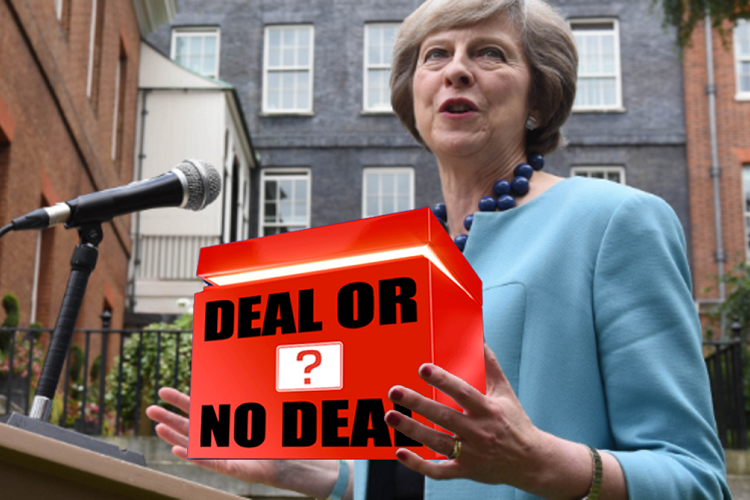
Deal or No Deal? The suspense is killing me – and my clients

I quite used to enjoy occasionally watching Deal or No Deal on television. Being a risk taker myself, it appealed to the gambler in me. A gambler who spent far too much time of his misprint youth playing fruit machines. Way back then, the stake was 5p and the jackpot was £2. Now the former can be up to £100 a spin.
The Gambling Act 2005 acted as the catalyst and ushered in a new era which not only allowed online gambling, but also the promoting thereof. Nightclubs became Casinos. Some high streets now have two William Hill’s so that they can operate eight fixed odd’s betting terminals (FOBT’s) in that area, and not just four. These after often referred to as the crack cocaine of gambling, which is why I am delighted that my propensity to play such machines has receded.
Against this explosion of both on and offline gambling, a plethora of TV franchises were devised to appeal to the gambler within most of us, with 'Who wants to be a Millionaire?' and 'Deal or no Deal' being just two examples.
During this period, I was helping US eCommerce companies reach out to and better serve their European customers by encouraging them to hold inventory in a Glasgow warehouse. It was an easy sell – given the global architecture of the World Wide Web, they already had European customers. The ease of doing business, same language, and one-time zone nearer to Uncle Sam than our European neighbours, and of course open access to some 500 million European consumers. Business was booming.
Then came 23 June 2016.
Understandably, my clients wanted to know what implications Brexit would have for them. At first, I focussed on the only tangible positive – the fact that they were now getting significantly more pounds for their buck, thanks to the relegation of sterling to one of the world’s worst-performing currencies.
However, knowing that tariffs for sending a sound blanket from Scotland to Italy might soon become a reality, I found it increasingly difficult to sell a destination I no longer believed in. After all, if I were a US Businessman or woman selling tangibles looking to expand into Europe, would l want to locate my business in a country that has elected to remove itself from the world’s largest trading bloc? No. In short, the UK is no longer such an attractive destination for overseas companies who have historically seen it as a gateway to Europe. On the contrary, it is arguably 28th on the list. A sizeable client had Glasgow and Amsterdam on his short-list for a new warehouse. The Netherlands won.
Being half German, I decided to turn my attention to helping UK (&US) SME’s remain not only inside the single market but to base themselves inside Europe’s beating heart. Doing so will give them a distinct advantage over their competitors, who are simply retreating behind the drawbridge and waiting to see what happens next.
And the stakes could hardly be higher. The top prize of £250,000 offered in TV’s ‘Deal or No Deal’ fades into insignificance when compared to the economic well-being of an entire country. Given the slow progress of talks, it is looking increasingly likely that we could be heading for a hard, or ‘cliff edge’, Brexit. A countdown clock on my website informs me that at the time of writing we have 539 days left.
The best-case scenario would be no change in the status quo – frictionless trade with the remaining 27 members of our largest export market.
The worst-case scenario does not bear worth thinking about: additional costs, bureaucracy, and disruption to the supply chain. The Dover port boss has already warned that the south east of England could come grinding to a halt if no deal can be agreed.
So, let’s hope for all our sakes that common sense will prevail and that a deal that suits us all can be reached. The UK is, after all, Germany’s largest export market for all those wonderful motor cars.
But given that common sense has been sorely lacking in British Politics as of late, I’m not holding my breath and am prepared more any eventuality – Deal or No Deal.
How Wales’ Businesses can Beat Brexit (and of course English & Scottish ones too)
(Published in https://businessnewswales.com/wales-businesses-can-beat-brexit/)
 British/German dual national Marc Jarrett, Managing Director of Emjay Consultancy Ltd, has historically focused on helping US firms expand into the UK.
The uncertainty surrounding Britain’s exit from the EU has created a major headache for businesses in Wales.
The countdown to Brexit is underway, but we still don’t know the terms of any trade deal with the 27 members of the EU. It’s difficult for businesses to plan for the future when they don’t know if they’ll be hit by tariffs.
So, an increasing number of UK companies are looking to create European subsidiaries to ensure they have a foothold in the EU whatever the outcome of Brexit negotiations.
For many, the obvious choice for a European base is Germany – the powerhouse economy of the EU.
British/German dual national Marc Jarrett, Managing Director of Emjay Consultancy Ltd, has historically focused on helping US firms expand into the UK.
Now, his company is focusing on helping both US and UK businesses establish themselves in Europe’s largest market, Germany.
“Of course, establishing a subsidiary overseas is nothing new,” he said.“However, with the countdown clock ticking and the terms of any deal with the EU27 still unknown, an increasing number of UK companies are proactively pursuing this option as a form of hedge or insurance policy.“This way, they can continue to trade freely within the EU without worrying about the ‘unknown unknowns’ that Brexit has created.“Brexit came as a shock to most Germans. Many are Anglophiles at heart and would welcome the opportunity to continue working with British companies that elected not to leave the European Union after all.“Germany has a business-friendly tax and legal system and its central location within Europe makes it the natural choice for British companies looking to establish a subsidiary or branch office on the continental mainland.”
MARC JARRETT’S GUIDE TO FORMING A GERMAN SUBSIDIARY
The most common legal company form is to establish a GmbH (Gesellschaft mit beschränkter Haftung) which is German for “company with limited liability”. The owners (Gesellschafter, also known as members) are not personally liable for the company’s debts. This is similar to a limited company in the UK.
A GmbH is formed in three stages:
- The founding association, which is regarded as a private partnership with full liability of the founding partners/members.
- The founded company (often styled as “GmbH I.G.”, with “I.G.” standing for in Gründung – literally “in the founding stages”, with the meaning of “registration pending”).
- The fully registered GmbH. Only the registration of the company in the Commercial Register (Handelsregister) provides the GmbH with its full legal status.
What do you Need?
Under German law, the GmbH must have a minimum founding capital, €12,500 of which must be raised before registering in the commercial register.
The company is run only by the managing directors (Geschäftsführer) who have an unrestricted proxy for the company and must be either a national of a European Union country or have a German work permit.
Shareholders, on the other hand, can be any UK entity, be it a person or a UK Limited company.
Other factors to bear in mind when establishing a presence in Germany include securing a business address, launching a German language website (local law dictates this must include an ‘impressum’ which outlines company details), appointing a good tax consultant, and hiring at least one German-speaking representative who can help during the formation period and possibly beyond.
Unlike in the UK, joining the local chambers of commerce is mandatory. However, doing so will allow members to grow their business contacts.
Social network XING is their LinkedIn, which is another useful way to engage with prospective customers or partners.
Emjay Consultancy Ltd helps with all the necessary aspects of establishing a presence in Germany including company formation, opening bank accounts, real and virtual offices, sourcing of staff, translation of website and marketing collateral into German. It has access to a network of professionals on the ground in Germany that can help with all aspects.
“We look forward to helping UK companies so that they can continue to do business in the epicentre of the world’s largest trading bloc and give them the edge over their competitors. We will be at their side to help them every step of the way,” Marc Jarrett said.
Saturday, 26 August 2017
PR - Gottesman Company Expands to Great Britain

Eugene Gottesman, President of Gottesman Company - "America's International Network of M&A Business Brokers" - announces that Gottesman has expanded from the USA to the United Kingdom.
HORSHAM, England - Aug. 26, 2017 - PRLog -- With its 1,000 Registered Buyers who own 5,000 companies between them and a loyal staff and 100 M&A professionals, Gottesman Company say they are in a position to do a good job. In fact, they say they have already begun to make progress.After 32 years operating in America, with frequent inquiries from other countries worldwide, Gottesman Company has decided to integrate itself into the global M&A world. Not only so they have 100 M&A professionals on their team, but they also have close relationships with 1,000 other M&A firms worldwide with whom have they built mutual trust.
"We are now expanding our brokerage team in the UK, on a selective basis, all of whom operate as independent contractors. We are fortunate to have a good research department as well as a good reputation," observes Gottesman, 88, one of only 20 Lifetime Certified Business Intermediaries.
"We work with both Sellers and Buyers of mid-sized businesses with whom we are in direct contact, as well as Sellers from outside firms whom we call Cooperating Intermediaries. Our Seller clients are privately held companies in manufacturing, distribution and large service firms in all types of categories. They include aerospace & defense, health care, logistics, energy, business services and 100 other classifications. Our Buyers are both private and public companies. We are in effect "generalists" because our Brokers come with experience from many fields of endeavor".
Gottesman prefers to operate on a "success fee" basis only. The Company do not require any client to advance retainers or front money.
"We like the British. They keep their word", says Gottesman. "We welcome inquiries from companies, private equity groups, and other brokerage firms, as well as career-minded M&A professionals who can handle "big ticket" transactions".
For more information, go to http://www.gottesman-company.com. To arrange a meeting, call Gottesman Company's UK VP and Regional Manager, Marc Jarrett on +44 (0) 7906786505, or if in the USA, call Eugene Gottesman, President at 203-984-4610 or email mjarrett@gottesman-company.com
Contact
Marc Jarrett
Gottesman Company
+447906786505
mjarrett@gottesman-company.com
 |
| The Company now has a UK office |
 |
| Eugene Gottesman |
Saturday, 8 July 2017
The antithesis of a ‘get rich quick’ scheme – life as Business Broker

In an increasingly interconnected world, there are a plethora
of work-at-home opportunities. Some of
these are bona-fide. However, most of
them are not. Advertisements claiming
that respondents can make big bucks from the comfort of their own home are often
misleading at best, and downright fraudulent in some cases.
This having been said, there are a large number of legitimate
opportunities to work remotely on a commission only basis. And it’s easy to see why: there is no cost or
commitment on behalf of the ‘employer’, with a reward system that is directly correlated
to results. But more often than not, the
remote worker needs to sell the underlying product or service in great quantities
in order to derive a decent living out of it.
Independent Contractors who are not only willing but
enthusiastic about working on a commission only basis should therefore consider
working in an industry where the commissions are often a great deal more than
most people earn in a year: by becoming a Business Broker.
M&A (Mergers and Acquisitions) is the term used to
describe the buying and selling of companies.
Professionals in the M&A ecosystem (Lawyers, Accountants, Bankers
and Professional Consultants) execute these complex transactions.
The role of a Business
Broker is to find a counterparty: to find a seller for buyers, and to find
buyers for sellers. No formal
qualifications are needed in order to become a Business Broker. Many are semi-retired professionals who enjoy
the flexibility of working remotely at their own pace in an industry where the financial reward can be significant.
No two days are the same, and it is up to the Broker as to
how they structure their working week.
This might include networking at Business Events to meet potential
sellers (or buyers), making telephone calls, research, and compiling listings.
But patience is needed: Even if a successful introduction is
facilitated by the Broker, it can sometimes take a year or more for any deal to
cross the finishing line. This is why
most Business Brokers are already financially independent and do not need a
monthly income, or they are working professionals who execute their M&A
activities on a part time basis.
To conduct such work independently world be a herculean
undertaking. It therefore makes much
more sense for such individuals to work within an umbrella organisation that
gives them the scale and support that is needed in order to succeed in this
business.
Gottesman Company (www.gottesman-company.com)
is one of the world’s largest networks of independent M&A Business
Brokers. It was established in 1985 by
Eugene Gottesman, Lifetime CBI, and Chairman.
Gottesman is different from conventional Business Brokers.
We do not “represent” either the buyer or the seller as a fiduciary agent.
Instead, we operate as independent M&A Business Brokers, part of the largest
such firm in the United States, with close to 100 professionals. We arrange the initial introduction and we only
earn a fee when there is a successful transaction.
Given the increasing prevalence and increasing number of
lower mid-market cross-border mergers and acquisitions, we are now hiring
Independent Contractors to represent us in all countries throughout the world.
If you have at least 10 to 40 years of general business and/or
outside sales experience, know how to read a basic financial statement, and are
computer literate you are welcome to apply to become our representative in your
region. A week’s training, ongoing
support, and sales leads are provided to successful applicants.
This is diametrically the opposite of a ‘Quick Buck’ – it’s
a slow burn. However, life as a Business
Broker for those who have patience can be very rewarding indeed, not only
financially, but in the flexibility of working flexibly from home at a pace of
your choosing
For more information, download and read the Application
Briefing on http://gottesman-company.com/careers/
Wednesday, 10 August 2016
My #Brexit journey – musings from an English/German dual national

My overwhelming emotion on the morning of Friday June 24th when David Dimbleby announced ‘we’re out’ was one of sadness. After all, whether I liked it or not, I am a hardwired European by virtue of my Father who, like Nigel Farage, elected to marry a German national. And liked it I did.
Unfortunately, my parent’s union did not last which resulted in my Mother returning to her native Fatherland when I was 7. I started travelling as an unaccompanied minor between the two countries, spending my time either in the sedate beauty of the Hertfordshire countryside in what was then Broken Britain, or in the brand new shiny modern metropolis of Düsseldorf. The contrast was striking.
Apart from attending an American School in Düsseldorf in 1973, my schooling was in England where I went to several state schools. Aged 11, I was sent to a boarding school in North Norfolk which was to become my new home for the next five years or so.
Back then, the second world war had not been all that long ago and anti-German sentiment was still relatively high. To this end, I distinctly remember trying to keep my German side private, for fear of being called a Nazi.
However, when in Germany and conversing with Germans who learnt I was half English, I always found the reception I got was far more favourable. It’s as if they were grateful to be speaking with an Englishman who accepted them.
In my thirties, moved to a small village called Blankenese on the outskirts of Hamburg where the love of all things British was arguably far greater than within Britain itself. Competition for the apartment was fierce, and I managed to secure it on account of the landlord being an Anglophile. You see, many Germans love the [still, just] United Kingdom and all things British.
In the early nineties, I found myself to be an enthusiastic proponent of the European project. After having spent countless hours waiting at border control in Netherlands, France and elsewhere, I rather liked the idea of free movement throughout all of Europe. I was sold. .
I was dating a MP’s daughter at the time who was kind enough to invite me to the public gallery on the evening that the Maastricht Treaty was ratified. All the top brass were there, and it was fascinating to be at the seat of power on such an historical day.
Over time, I detected less anti-German sentiment this side of the channel and subsequently became less inhibited about my German heritage. On the contrary, I was proud – Germany had become Europe’s economic powerhouse. Plus I love German cars and the fact that there are no speed limits there!
Germany’s hosting of the 2006 FIFA World Cup was a turning point for me since I knew that many Brits visiting the tournament would not have normally have elected to go there. But when they came back, many observed how friendly their hosts were and what a beautiful country is was. From this point forward, I would no longer hide my German side – on the contrary, I would embrace it.
A decade later, the British electorate decided that the European project was not such a good idea after all. Perhaps unsurprisingly, given my intrinsic European credentials, I voted remain.
But I totally ‘get’ some of the arguments that the other side made – the bloated bureaucracy, unelected officials, and the fact that Great Britain has always been and outwardly looking global trading nation.
In the meantime, however, we have to live with Brexit and all its unforeseen consequences.
In recent years, I have been helping North American SME’s make UK their European home. It was an easy pitch: Business friendly, same language, and access to the world’s largest trading bloc.
Now that the UK is not such an attractive proposition, I will be helping UK & US SME’s establish a subsidiary in, you guessed it, Germany. This allows them to structure their affairs in such a way that they do not actually leave the European Union at all and can continue trading freely with the remaining 27 members.
I really hope that the Britain envisioned by those than wanted us to leave comes to pass, but I think it will take a while to get there. In the meantime, we are left pondering if the Le Touquet treaty will hold.
Now, where’s my German passport?
Monday, 8 August 2016
Why UK SME’s should consider making Hamburg their new European home

The seismic
events occasioned by Britain’s decision to leave the European Union have forced
many UK companies to consider restructuring their affairs in such a way that they
do not actually end up leaving it at all.
Establishing
a European subsidiary, of course, is nothing new. But Brexit has caused many British companies to
consider this possibility as a form of insurance policy so that they can continue
to trade freely with the remaining 27 member states without having to worry
about the countless unknown unknowns that it has created.
When it
comes to deciding in which country within Europe to relocate, most companies
are perhaps unsurprisingly electing to do so in its largest and richest
market. But where within Germany should
they establish themselves?
Having lived
and worked there for over a decade myself, I can wholeheartedly recommend its
most beautiful and prosperous City, Hamburg.
Situated on
the river Elbe, Hamburg is the second largest city in Germany and the eighth
largest city in the European Union. It
has a population is over 1.7 million people, and is Germany’s most Anglophile
City with several thriving English-speaking communities.
Thanks to
its geographical location and easy accessibility by water, road, rail and air, Hamburg
is an outstanding hub of logistics in world trade and the most important
logistics location in Northern Europe.
Hamburg‘s
economic structure is dominated by the services sector. The Hanseatic city is
traditionally the most important trading centre for goods of all kinds in
northern Europe, and central gateway for the overseas trade in the Baltic Sea
region.
Moreover, Hamburg
is home to many major players in the business services sector, in particular
for banks and insurance companies and is host to a dynamic fintech sector, with
numerous start-ups developing intelligent digital solutions for next generation
banking.
Furthermore,
Hamburg leads the way in a number of other sectors including media, music,
film, PR, online, software and games.
This is why Internet giants such as Google, Facebook, Adobe, Systems
Engineering, Twitter, Hootsuite and Yelp decided to make Hamburg as their
German headquarters.
The list of
long-established advertising agencies in Hamburg is tantamount to a "who’s
who" of the German advertising industry.
Other areas in which the City excels includes Life Sciences and Wind
power.
When it comes
to quality of life, “The Economist” consistently ranks Hamburg as one of the
most the most livable cities in the world.
This is a sentiment to which I concur.
With this in
mind, I am seriously considering moving back there once my son starts university,
and I would be delighted to help any UK company establish themselves in this,
the most British of German cities.
Sunday, 3 July 2016
Using Brexit as an opportunity to grow your European Business

For the 48% of us that voted to remain inside the European
Union, the referendum result came intially as a unwelcome shock to most of
those who are in the business of doing business. But as Napoleon Hill once pointed out, every
adversity, every failure, every heartache carries with it the seed of an equal
or greater benefit.
Agile and forward thinking UK SME’s can mitigate the risks associated
with leaving the EU by structuring their affairs in such a way that they do not
actually leave it at all.
Creating an EU subsidiary will not only allow them to
capitalize on the opportinities afforded by continuing to freely trade with the
remaining 28 member states within the world’s largest trading bloc, but also it
will give them a distinct advantage over their UK competitors who don’t seize
the initiative and simply retreat behind the drawbridge and wait to see what
happens next. But procrastination is not
only the thief of time, it also does a pretty good job of ensuring that business is not as brisk as it should be.
Consequently, the post-Brexit period of widespread
uncertainly in which we now find ourselves is the perfect time for UK companies
to secure their future by opening a branch office in Europe’s powerhouse economy,
Germany.
Not only will so doing ensure that they can continue to trade
and to provide services throughout the entire European Union, but also it will
alleviate any fears that customers or suppliers might have by demonstrating
that they are fully committed to the European project, despite the Brexit
outcome and all the uncertainties associated with it.
Securing a foothold in Europe’s key market therefore offers
enormous advantages to SME’s already trading with Germany, but also to
companies that have been considering establishing a presence in Europe anyway.
Only an hour or so flight from most UK airports, Germany has
a business friendly tax and legal system and its central location within
Europe makes it the natural choice for British companies looking to establish a
subsidiary or branch office on the continental mainland.
The most common legal form is to establish a GmbH (Gesellschaft
mit beschränkter Haftung) which is
German for "company with limited liability" - The name of the GmbH
form emphasises the fact that the owners (Gesellschafter, also known as
members) of the entity are not personally liable for the company's debts.
It is widely accepted that a GmbH is formed in three stages:
the founding association, which is regarded as a private partnership with full
liability of the founding partners/members; the founded company (often styled
as "GmbH i.G.", with "i.G." standing for in Gründung –
literally "in the founding stages", with the meaning of
"registration pending"); and finally the fully registered GmbH. Only
the registration of the company in the Commercial Register (Handelsregister)
provides the GmbH with its full legal status.
Under German law, the GmbH must have a minimum founding capital
, from which €12,500 have to be raised before registering in the commercial
register . The company is run only by the managing directors (Geschäftsführer)
who have unrestricted proxy for the company and must be either a national of a
European Union country or have a German work permit. Shareholders, on the other hand, can be any
UK entity, be it a person or a UK Limited company.
Other factors to bear in mind when establishing a
presence in Germany includes securing a business address, launching a German language
website - local law dictates this must include an ‘impressum’ which outlines company
details, appointing a good tax consultant, and hiring at least one German
speaking representative that can help during the formation period and possibly beyond.
Unlike in the UK, joining the local chambers of
commerce is mandatory. However, doing so
will allow members grow their business contacts. Social network XING is their LinkedIn, which is another useful way to engage with prospective customers or partners.
Brexit came as a shock to most Germans. Many are Anglophiles at heart and would
welcome the opportunity to continue working with British companies that elected
not to leave the European Union after all.
Monday, 28 March 2016
In or out, Britain must export more - irrespective of the referendum outcome
Thursday 23rd June this year will be a historic day:
after years of heated debate, the British electorate will cast their vote for
the second and presumably final time and decide whether Great Britain will
remain within the European Union, or make the bold decision to leave and stand
on its own two feet outside it. Either way, the importance of this day
cannot be overstated since it has implications both in the short term, and for
generations to come.
Personally, I am still undecided but am leaning towards ‘in’ –
but I understand the arguments put forward by those who are steadfast in
wanting us out. As former US Sectary of Defence Donald Rumsfeld once
pointed out, there are “known unknowns. That is to say, there are things that
we now know we don't know.” This describes a ‘Brexit’ most eloquently in
my opinion, and it is why I am erring on the side of caution and most likely
will vote to remain ‘in’.
Whatever the outcome, the case made by those that want us to
leave are valid ones: We are the fifth-largest economy in the world and punch
above our weight on the global stage. A proud trading nation, ‘Brand
Britain’ is synonymous with quality, innovation and sometimes style. But
there are some things that we are not very good at. And given that the
UK's goods trade gap with the rest of the world stands at a record high of
£125bn in 2015, it would appear that exporting is one of them.
I apportion part of the blame on language. While English
has become the de facto world’s standard when communicating in business, this
lends itself to a certain complacency which is all too plain to see when
visiting the websites of the majority of UK companies: stubbornly sticking to
an ‘English only’ sales policy when reaching out to new customers, partners and
distributors located outside the (still) United Kingdom.
Even worse, some of them seem to think that simply adding a
Google translate widget to their homepage will suffice for their international
outreach efforts. However, this often does more harm than good. Google
excels at a lot of things, but translation is not one of them. Said
translations will be riddled with grammatical inconstancies, and any visitor
from overseas that takes the trouble to click through to the automated
translated version will see that the company has not made any meaningful effort
to reach out to them in their mother tongue.
As the name suggests, the World Wide Web - which was invented by
a Brit - is a truly global medium.
To this end, all UK companies that export – or want to – can and should be
leveraging this universal reach using localized
websites. This means adapting an existing website to local
language and culture in the target market: adapting it to the linguistic and cultural
context. This involves much more than the simple translation of text. The
modification process must reflect specific language and cultural preferences in
the content, images and overall design and requirements of the site – all while
maintaining the integrity of the website, corporate identity and overall
message.
Today all markets throughout the world are web-centric,
sophisticated, diverse, mobile and increasingly competitive. Today, local
websites are essential for UK companies to compete successfully
internationally.
Whatever the outcome in June’s crucial referendum, those
companies that take the time and effort to localize their website will be doing
both themselves and the UK a favour by doing their bit in helping reduce that
enormous trade deficit and narrow the gap between the amount we import and
export. After all, it is called the World Wide Web for good
reason.
Friday, 26 February 2016

Subscribe to:
Posts (Atom)